Functional Areas
The Blockchain & Climate Institute focuses on sustainable finance, energy and environment, climate adaptation, and regulatory issues, using blockchain technology to drive transparency, resilience, and innovation in climate action.
Functional Areas .

One of the BCI’s key focus areas is sustainable finance. BCI recognises that financial systems play a crucial role in shaping our planet’s future.
By leveraging artificial intelligence and distributed ledger technology, BCI explores ways to enhance transparency, accountability, and efficiency in financial transactions related to climate action.
BCI aims to foster responsible investment practices, promote technology-based solutions to plug the global climate finance gap, and facilitate the flow of capital towards adaptation and mitigation projects, especially in developing-country communities. Our work bridges the gap between finance and sustainability, ensuring that economic decisions align with our planet’s well-being.
Research Division I has unveiled a groundbreaking solution: the “Sustainability-Linked Fixed Income Market (Bonds/Loans)” empowered by cutting-edge digital technologies like Artificial Intelligence (AI), the Internet of Things (IoT), and Distributed Ledger Technologies (DLT), for example. This innovative approach specifically targets the UK Real Estate sector, aiming to tackle critical challenges in upscaling the issuance, credit allocation, and environmental impact monitoring of Green Bonds on the blockchain.
The complexity of the task necessitates a focused use case. BCI’s solution addresses key pain points, including the scarcity of data, inconsistencies in available data and methodologies, and the lack of scalable financial products/services that effectively connect projects and investors. By leveraging blockchain-enabled green/sustainability bonds, BCI envisions a more inclusive financial landscape—one that empowers a broader spectrum of organisations, especially SMEs, to issue bonds for truly sustainable projects. Their commitment to driving positive change earned them recognition as a finalist in the G20 TechSprint Competition 2021. Through our tireless efforts, BCI continues to pave the way for a cleaner, greener future where finance and sustainability intersect harmoniously.
BCI also plays an active role in co-developing the ISO 14097:2021 standard (Framework including principles and requirements for assessing and reporting investments and financing activities related to climate change); and ISO/TC 322 sustainable finance standard.

Research Division I has unveiled a groundbreaking solution: the “Sustainability-Linked Fixed Income Market (Bonds/Loans)” empowered by cutting-edge digital technologies like Artificial Intelligence (AI), the Internet of Things (IoT), and Distributed Ledger Technologies (DLT), for example. This innovative approach specifically targets the UK Real Estate sector, aiming to tackle critical challenges in upscaling the issuance, credit allocation, and environmental impact monitoring of Green Bonds on the blockchain.
The complexity of the task necessitates a focused use case. BCI’s solution addresses key pain points, including the scarcity of data, inconsistencies in available data and methodologies, and the lack of scalable financial products/services that effectively connect projects and investors. By leveraging blockchain-enabled green/sustainability bonds, BCI envisions a more inclusive financial landscape—one that empowers a broader spectrum of organisations, especially SMEs, to issue bonds for truly sustainable projects. Their commitment to driving positive change earned them recognition as a finalist in the G20 TechSprint Competition 2021. Through our tireless efforts, BCI continues to pave the way for a cleaner, greener future where finance and sustainability intersect harmoniously.
BCI also plays an active role in co-developing the ISO 14097:2021 standard (Framework including principles and requirements for assessing and reporting investments and financing activities related to climate change); and ISO/TC 322 sustainable finance standard.

BCI recognises that the world needs a collective of experts well-versed in the intersection of blockchain, biodiversity conservation and renewable energy. We desire to engage stakeholders within existing environmental and energy governance systems by curating and mainstreaming innovative yet administratively feasible use cases and solutions. By contributing to global technology transfers, BCI plays a crucial role in advancing the deployment of clean energy, energy efficiency, supply chain transparency, and environmental accountability. Through our expertise, BCI contributes to a greener planet, where technology serves as a powerful instrument to decarbonise the global energy sector and catalyse global environmental conservation efforts.
In 2022, BCI’s Research Division II launched an ambitious initiative: a proprietary blockchain-based peer-to-peer electricity trading platform, funded by Innovate UK. This groundbreaking platform is intricately linked to the installation of microgrid photovoltaics, which harnesses renewable energy for two rural communities in Indonesia. By facilitating direct energy transactions between prosumers, BCI aims to empower these communities to tackle the energy “trilemma”: ensuring clean energy, affordable energy, and accessible energy. But BCI’s vision extends beyond mere technological advancements. We also emphasise gender mainstreaming and social inclusion as an integral part of our technical assistance project design in Asia and Sub-Saharan Africa. Through this pilot project, BCI not only transforms the energy landscape but also contributes to a more equitable and sustainable future for all.
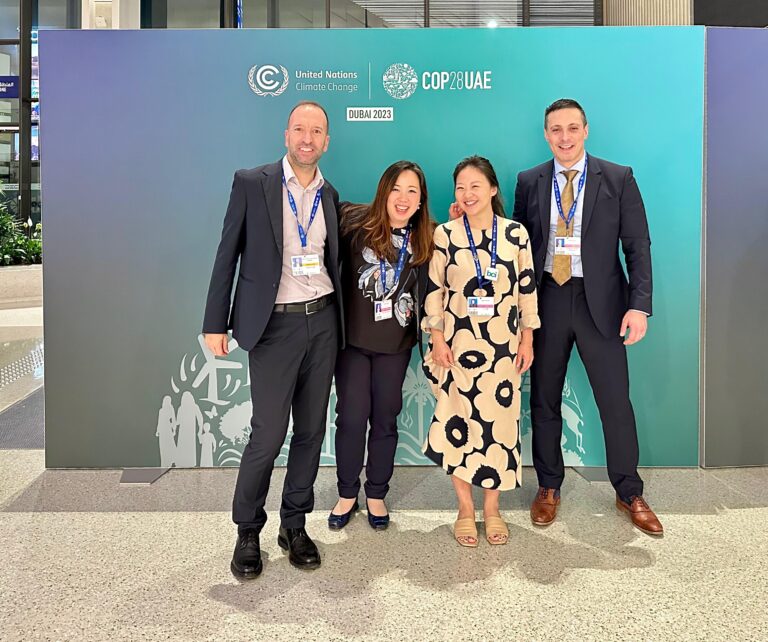
In 2022, BCI’s Research Division II launched an ambitious initiative: a proprietary blockchain-based peer-to-peer electricity trading platform, funded by Innovate UK. This groundbreaking platform is intricately linked to the installation of microgrid photovoltaics, which harnesses renewable energy for two rural communities in Indonesia. By facilitating direct energy transactions between prosumers, BCI aims to empower these communities to tackle the energy “trilemma”: ensuring clean energy, affordable energy, and accessible energy. But BCI’s vision extends beyond mere technological advancements. We also emphasise gender mainstreaming and social inclusion as an integral part of our technical assistance project design in Asia and Sub-Saharan Africa. Through this pilot project, BCI not only transforms the energy landscape but also contributes to a more equitable and sustainable future for all.
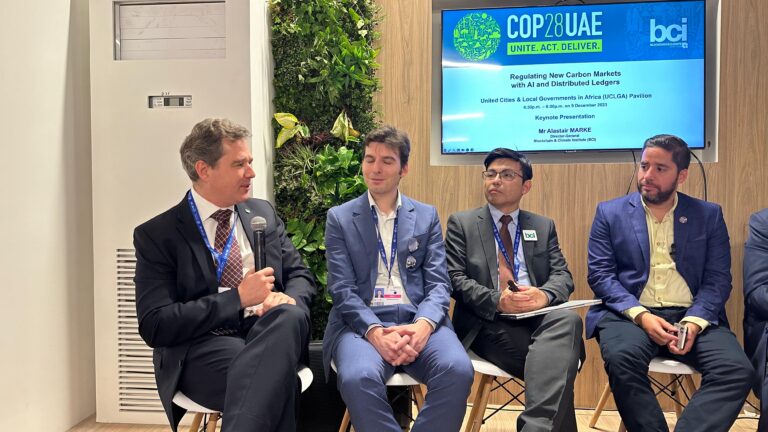
One critical area where BCI shines is in climate adaptation and resilience. We recognise that building resilience to natural disasters is essential for climate change adaptation.
To this end, BCI explores cutting-edge solutions, including parametric insurance with blockchain technology. By combining these tools, they aim to enhance our ability to withstand and recover from climate-related shocks.
In Bangladesh, BCI’s Research Division II embarked on a feasibility study funded by the British Council. This study was to explore how blockchain technology could revolutionise the monitoring of adaptation infrastructure projects, including critical initiatives like typhoon shelters. By leveraging blockchain’s transparency and immutability, BCI aims to enhance project accountability and ensure efficient procurement processes in the spirit of results-based climate finance. We actively engaged with stakeholders in the Bangladeshi Government by organising capacity-building workshops. These collaborative efforts empower decision-makers, fostering a deeper understanding of blockchain’s potential in climate resilience.
Meanwhile, in Fiji, the BCI Fellowship Scheme Bureau-Resilience Council took on another critical task. With funding from the Commonwealth Secretariat, in collaboration with the Government of Fiji and the United Nations’ Pacific Insurance & Climate Adaptation Programme, we conducted a feasibility study that assessed the demand, technical feasibility, and economic viability of blockchain-based climate catastrophe insurance. Envisioning a system where insurance claims are streamlined, transparent, and responsive during climate-related disasters, BCI’s work with Fiji paves the way for a more resilient and prepared future, where technology becomes our ally in the face of adversity.
Imagine a world where communities are better prepared for extreme weather events, where insurance payouts are swift and efficient, and where transparent climate accounting systems empower decision-makers. BCI’s work in this space contributes to a more resilient and climate-ready future, where technology plays a pivotal role in safeguarding our planet.

The BCI is at the forefront of addressing legal and regulatory challenges in the realm of digital assets. Their work revolves around navigating the intricate landscape of distributed ledger technology (DLT) and blockchain, which are transforming how we handle financial, property, and legal services associated with green assets.
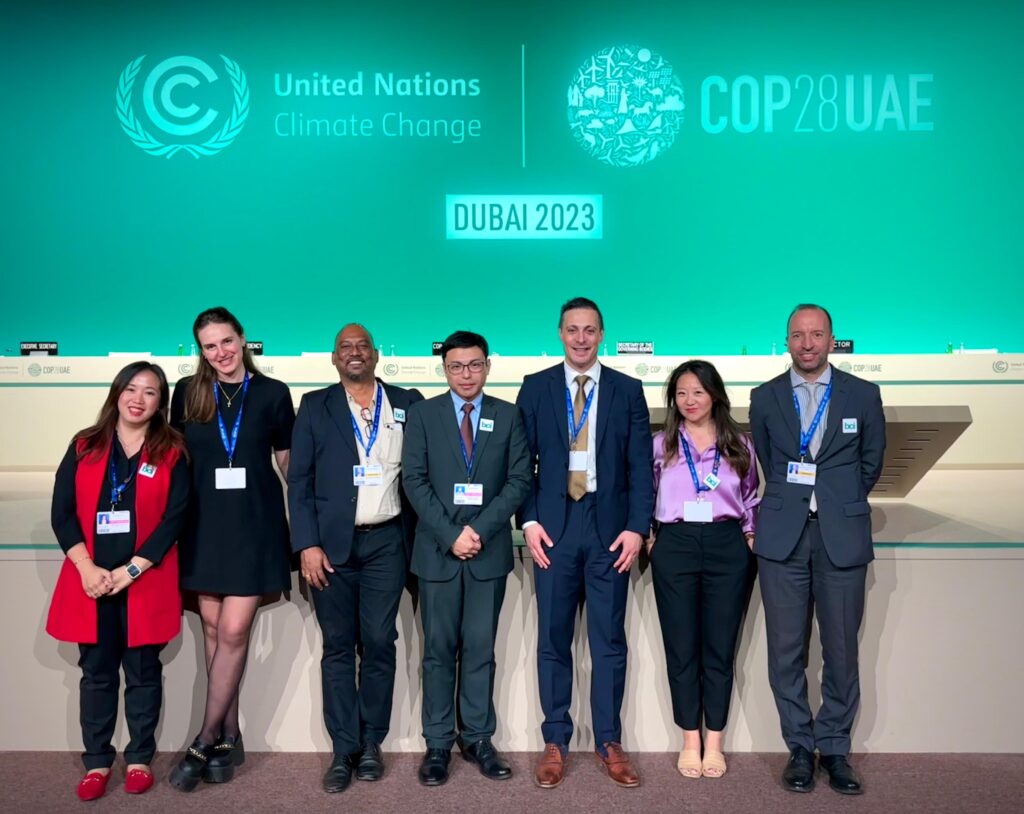
In the riveting sequel to our debut book, “Transforming Climate Finance & Green Investment with Blockchains,” BCI Research Division III has penned another groundbreaking masterpiece: “Governing Carbon Market with Distributed Ledger Technology”. It is a legal compass for navigating the uncharted waters of regulating carbon markets on distributed ledgers. Before the global climate showdowns, we hosted a series of annual Blockchain Information Sessions—a symphony of knowledge—for climate negotiators from 55 countries, which bring together diplomats, policymakers, and visionaries huddled around screens before every COP.

In September 2021, we dropped a summary report like a meteorite into the COP26 arena. It was our gift to negotiators—a concise roadmap through the complexities of blockchain and climate action.
BCI Research Division III has also made contributions about digital asset regulatory approaches to the UK Law Commission, governments of British Overseas Territories, and the European Securities and Markets Authority.
The Blockchain and Climate Institute’s guidance serves as a valuable stepping stone, equipping climate policymakers to navigate this evolving terrain and contribute to the responsible adoption of digital green assets.
Work Approach .
Capacity Building
Technology Transfer Process (TTP)
Technology Information
Enabling Policy Environment
Mechanism for Knowledge Transfer
Work Approach .
Capacity Building
Strengthening the capacity of key climate policy actors by providing advisory services, technical knowledge, and skill development to organizations.
Technology Transfer Process (TTP)
The TTP guides the design of workflow under every Technical Assistance project with recipient governments or stakeholders.
Technology Information
Spreading knowledge of blockchain and emerging digital technologies within the climate community, supporting the UNFCCC Technology Transfer Framework.
Enabling Policy Environment
Advocating for policies, legal frameworks, and administrative changes that facilitate the use of blockchain and digital technologies in climate finance.
Mechanism for Knowledge Transfer
Aiding in adoption of blockchain solutions by promoting research and partnerships, building confidence in these technologies.